Sorgavaasal Movie Recap and Ending Explained
Full spoilers for Sorgavaasal (2024): who killed Siga, how Kattabomman walked away with a promotion, and what Parthi choosing to stay in prison means.
Full spoilers follow for Sorgavaasal (2024), including its ending.
Sorgavaasal ends with its corrupt system rewarding everyone who lied to preserve it. Kattabomman (Karunas), the senior prison officer who arranged the fatal poisoning of gangster Sigamani, walks away with the SP promotion that had been withheld from him. Parthiban (RJ Balaji), the falsely accused street-food vendor who kills the superintendent in the film’s climactic confrontation, receives outside funding for the restaurant he has always wanted to open, yet chooses to stay inside the prison where he has learned how power actually works. Retired Justice Ismail (Natty Subramaniam), who chairs the inquiry commission investigating the 1999 riot at Madras Central Prison, suspects the official record is fabricated. He cannot prove it. The 2024 Tamil-language prison drama, directed by Sidharth Vishwanath and streaming on Netflix since December 27, 2024, frames that stalemate as the system working exactly as intended.
What Put Parthi Behind Bars
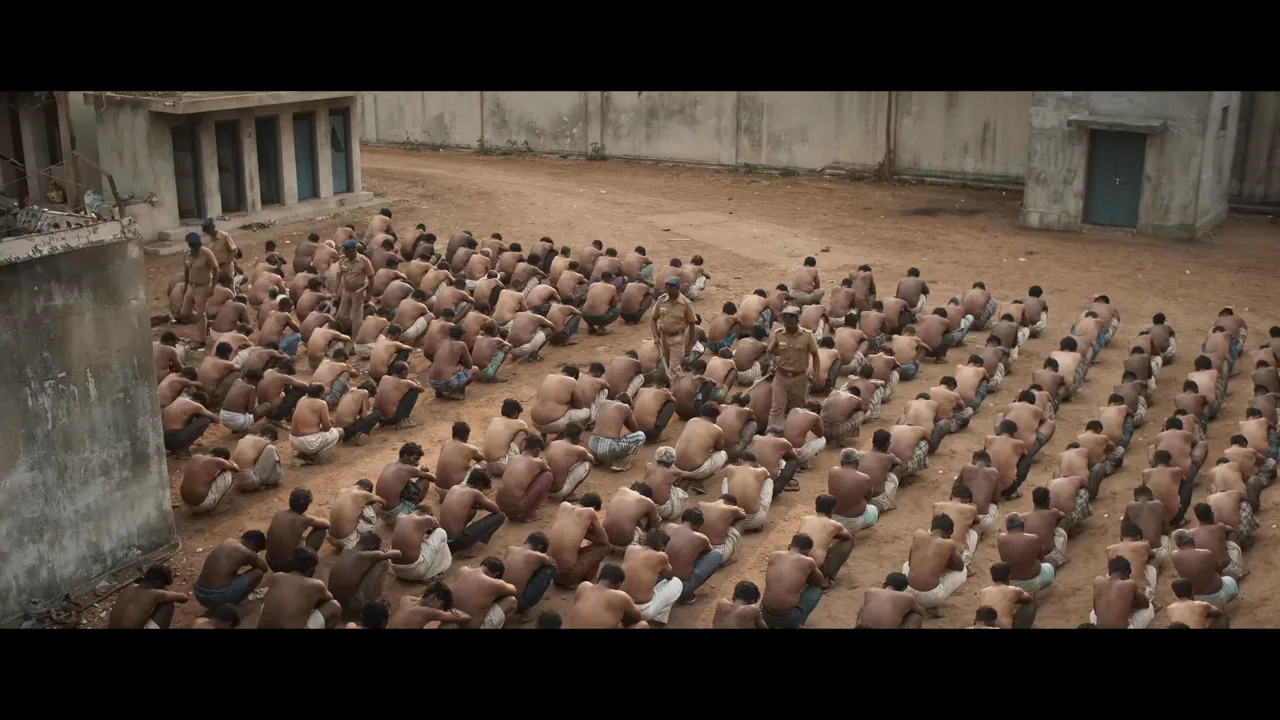
IAS officer Shanmugam was murdered just before Parthi’s bank loan was approved, and the real culprits placed the blame on Parthi. The two men knew each other: Shanmugam had used his position to help Parthi, who runs a roadside dosa stall, secure financing for the restaurant he planned to open. When Shanmugam was killed, the evidence was constructed to point at Parthi. His mother could not work through the institutional steps needed to secure visiting rights. His fiancee Revathy (Saniya Iyappan) was left equally powerless on the outside.
The film delivers this backstory through its inquiry commission structure, one of several formal choices that separate Sorgavaasal from a straight prison thriller. Witnesses reconstruct events in 2000, a year after the riot, and their accounts do not always align.
The Prison World Siga Built
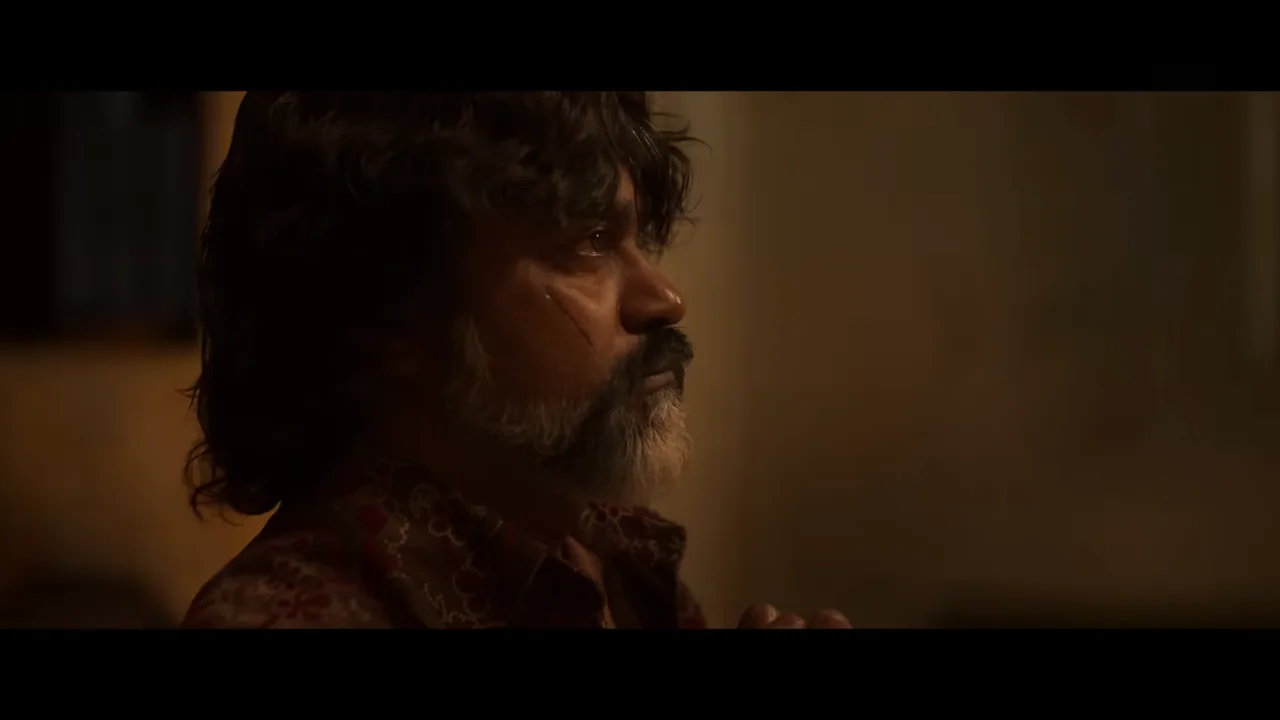
Sigamani, known as Siga, held effective control over Madras Central Prison before Parthi arrived. Selvaraghavan, the Tamil filmmaker behind Kaadhal Kondein and Pudhupettai, takes the role, and his physical authority reads clearly in the part. Siga ran the prison through a close circle: Tiger Mani (Hakim Shahjahan) as his enforcer; Seelan (Antonythasan Jesuthasan), an inmate who served as a steadying presence in the group; and Kendrick (Samuel Abiola Robinson), a Christian convert whose faith had slowly pulled Siga toward reform. The film shows Kendrick baptizing Siga in a scene the film presents without irony.
By the time of the inquiry, Siga knew that the politicians who had once used him had left him to rot. He had been considering going public with what he knew, a position that made him a threat to members of both the ruling government and the opposition.

How a New Superintendent Broke the Equilibrium
SP Sunil Kumar (Sharaf U Dheen) arrives determined to reassert state authority over the prison, and his approach is to treat Siga’s established network as a threat to be confronted rather than a reality to be managed. His treatment of Kendrick, culminating in Kendrick’s death during solitary confinement, is the act that collapses whatever stability the prison had. Siga, who had been moving toward a quieter course, is pushed back toward his old anger.
Sunil then identifies Parthi as someone he can use. He reassigns Parthi to the kitchen, arranges a court-date meeting with Parthi’s mother, and builds enough trust to ask Parthi to adulterate Siga’s food, supposedly to make him ill enough to be moved to a hospital where information about Shanmugam’s murder could be obtained. Parthi agrees and then pulls back.
Who Killed Siga, and Why
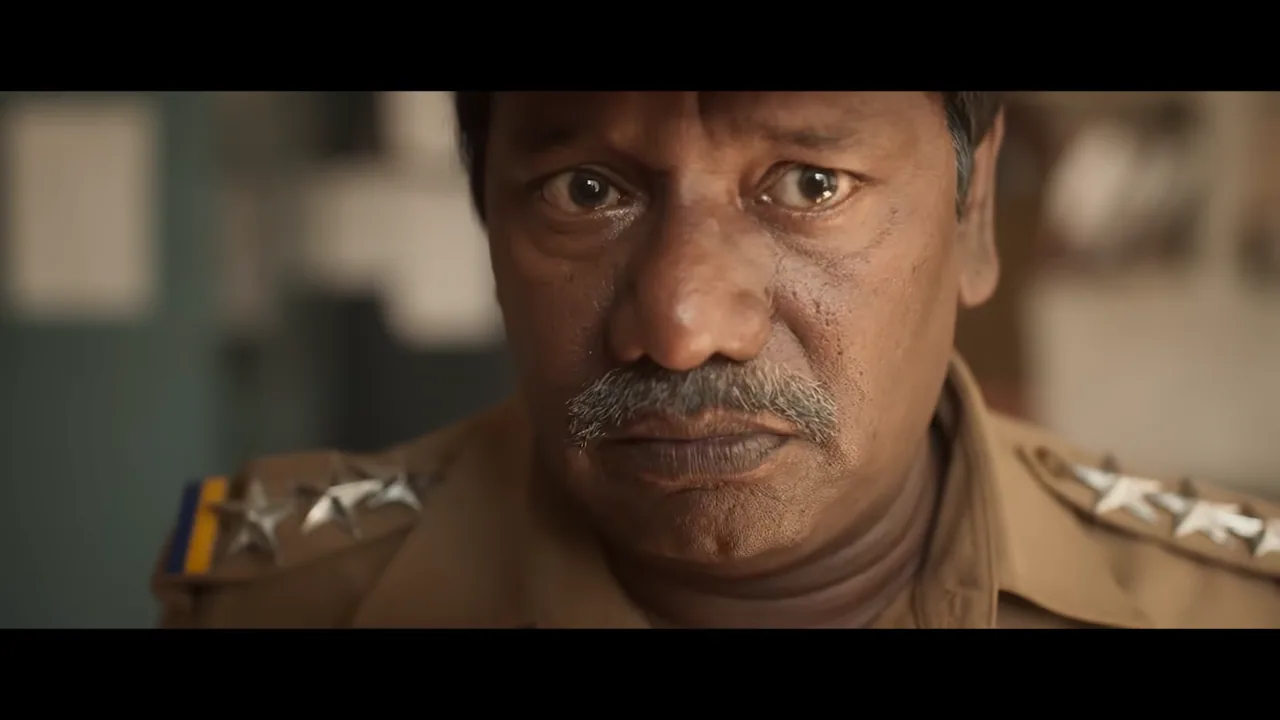
Kattabomman, not Sunil Kumar and not Parthi, killed Siga. A 30-year veteran of the prison who had been passed over for the SP position that went to Sunil, Kattabomman had motives of his own alongside those of the politicians who commissioned the act. Kattabomman used Mohan, a prisoner with a drug habit, to lace Siga’s food with a lethal substance. Siga collapsed and died in transit to the hospital.
The character has a documented real-world counterpart. Boxer Vadivelu, a gangster from the Kasimedu fishing community in Chennai, died in Madras Central Prison in November 1999. His widow alleged that jail officials and politicians were behind the death. The government conducted a postmortem and promised to make the findings public. Nothing was released. Riots following Vadivelu’s death killed at least 10 people, including a prison official. Sidharth Vishwanath, who worked as an assistant director under Pa. Ranjith before making Sorgavaasal as his debut feature, built the film around that unresolved history.
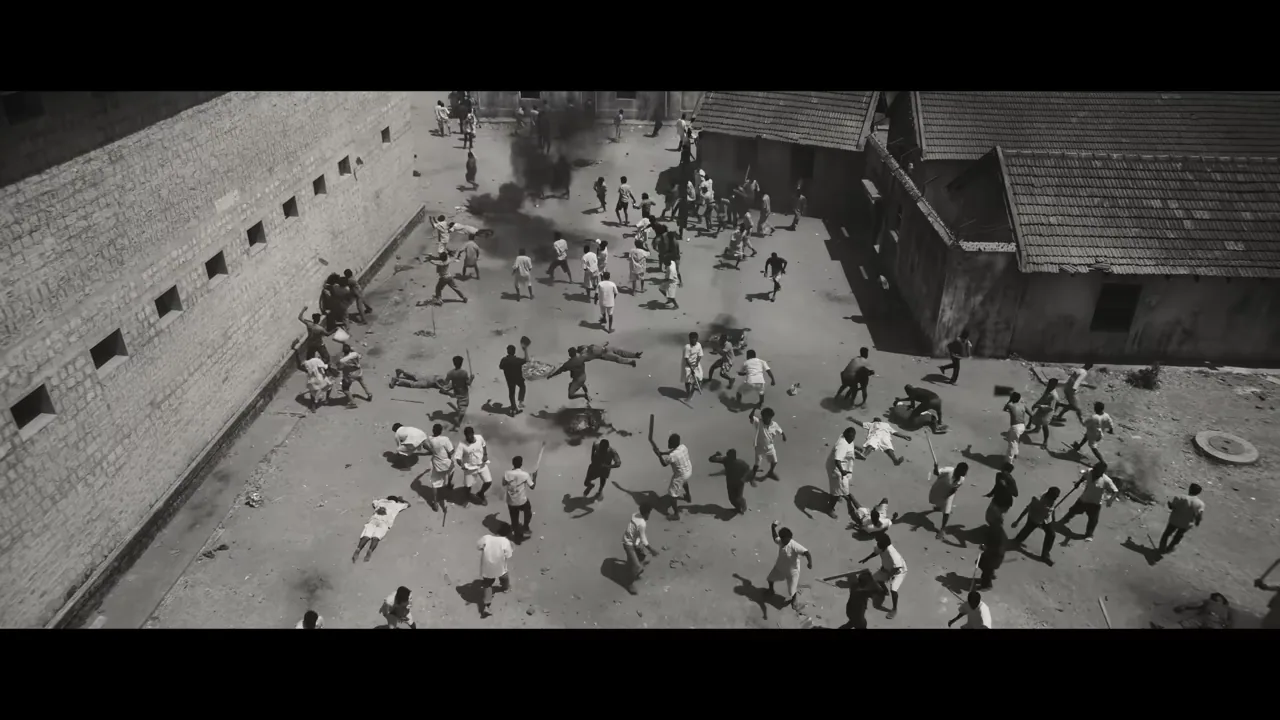
After Siga’s death, Mani takes a group of MLAs hostage inside the prison and demands accountability for his leader’s murder.
Parthi’s Decision and What the Commission Is Told
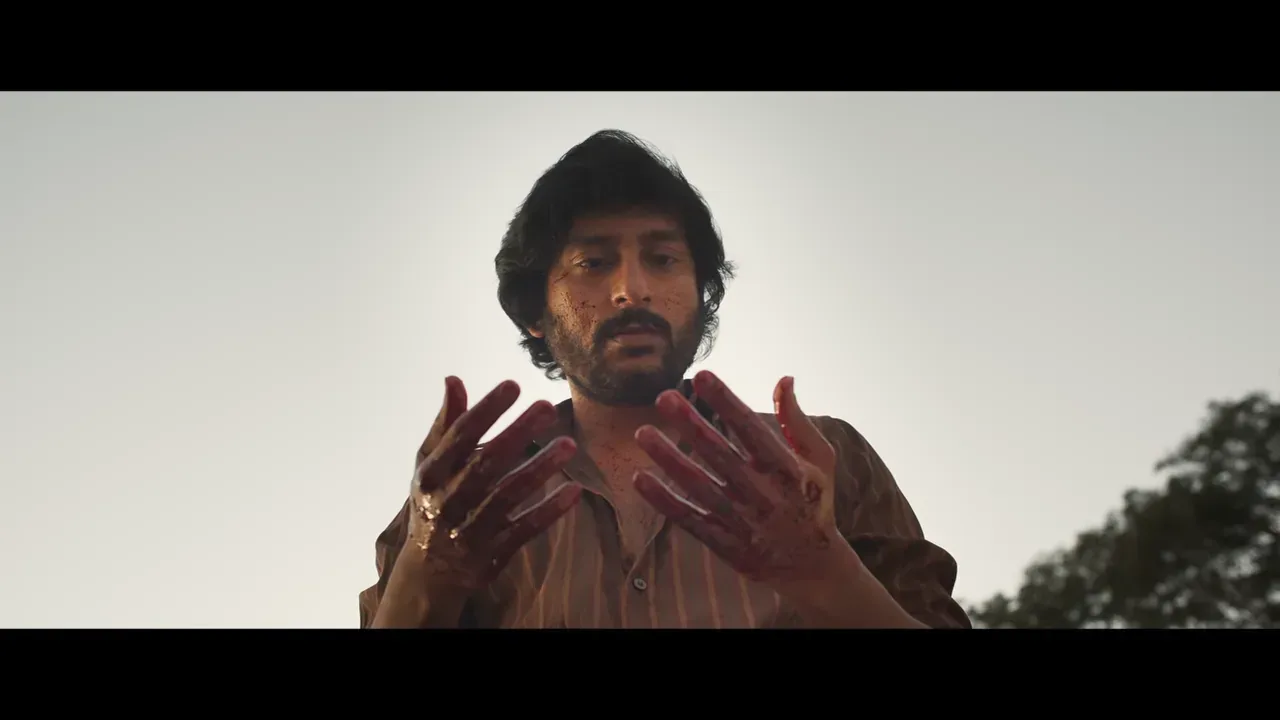
Parthi strikes a deal with Sunil Kumar during the hostage standoff: reveal where the MLAs are being held, and Sunil will facilitate his release. The arrangement collapses when Sunil kills Bashir (Balaji Sakthivel), the prison cook who had become Parthi’s closest anchor inside the institution, and then publicly calls Parthi a rat in front of the other inmates. Parthi kills Sunil. What he declares in that moment is that he is not, and has never been, anyone’s informant.
Kattabomman moves quickly. He kills Mohan and the other people who could expose his role in Siga’s death, then testifies to the inquiry commission that Mani was responsible for the violence. Since one of the hostage MLAs has since risen to Home Minister, the political incentive to close the file is clear.
The commission accepts the account. Kattabomman receives his SP promotion. Parthi gets an outside source of funding for his restaurant, the goal that defined his life before Shanmugam was killed. He does not use it. He stays in the prison.
What the Ending of Sorgavaasal Is Actually Saying
The film’s closing line, voiced as Parthi remains inside the institution, is that life runs on two tracks: kneel down in heaven or be king in hell. Parthi has not chosen the second option in any triumphant sense, but the first is no longer available to him. The choices he made under pressure, and the choices forced on him, have placed him somewhere in between.
What the verified facts add to the ending is that the inquiry commission, the film’s central structural device, is not designed to find the truth. It is the mechanism through which an official record is assembled and closed. Ismail reads the situation accurately and has no instrument to act on that reading. The film’s title translates to “Gate of Heaven,” a phrase that describes where no one in this story ends up.
The real case that the film draws from produced no official reckoning. Boxer Vadivelu’s widow filed her allegations and the state made promises. The findings were never published. Sorgavaasal’s ambiguous ending does not ask the viewer to imagine a different outcome, only to recognize a familiar one.