Netflix’s The Last House Is Getting Backlash From Viewers, But Is It Really That Bad?
Netflix has a strange hit on its hands with The Last House. Louis Leterrier’s sci-fi thriller raced to No. 1 on Netflix’s global English-language movie chart with 27.5 million views during its first measured week, yet its reception tells an almost opposite story. At the time of writing, its Rotten Tomatoes critic and audience scores…
Netflix has a strange hit on its hands with The Last House. Louis Leterrier’s sci-fi thriller raced to No. 1 on Netflix’s global English-language movie chart with 27.5 million views during its first measured week, yet its reception tells an almost opposite story. At the time of writing, its Rotten Tomatoes critic and audience scores have both been reported in the high 20s, while viewer discussions are full of complaints about the ending, the creatures and a growing list of apparent plot holes.
The backlash is not simply people trolling a popular Netflix movie. There are legitimate problems with the way The Last House explains its rules, particularly once its tense lockdown drama becomes an ecological monster movie. But calling the whole film terrible overlooks a strong first half, committed performances from Wagner Moura and Greta Lee, and a survival premise that works surprisingly well before the final act starts demanding answers it cannot fully provide.
Spoilers ahead for The Last House.
Why Are Viewers Turning Against The Last House?
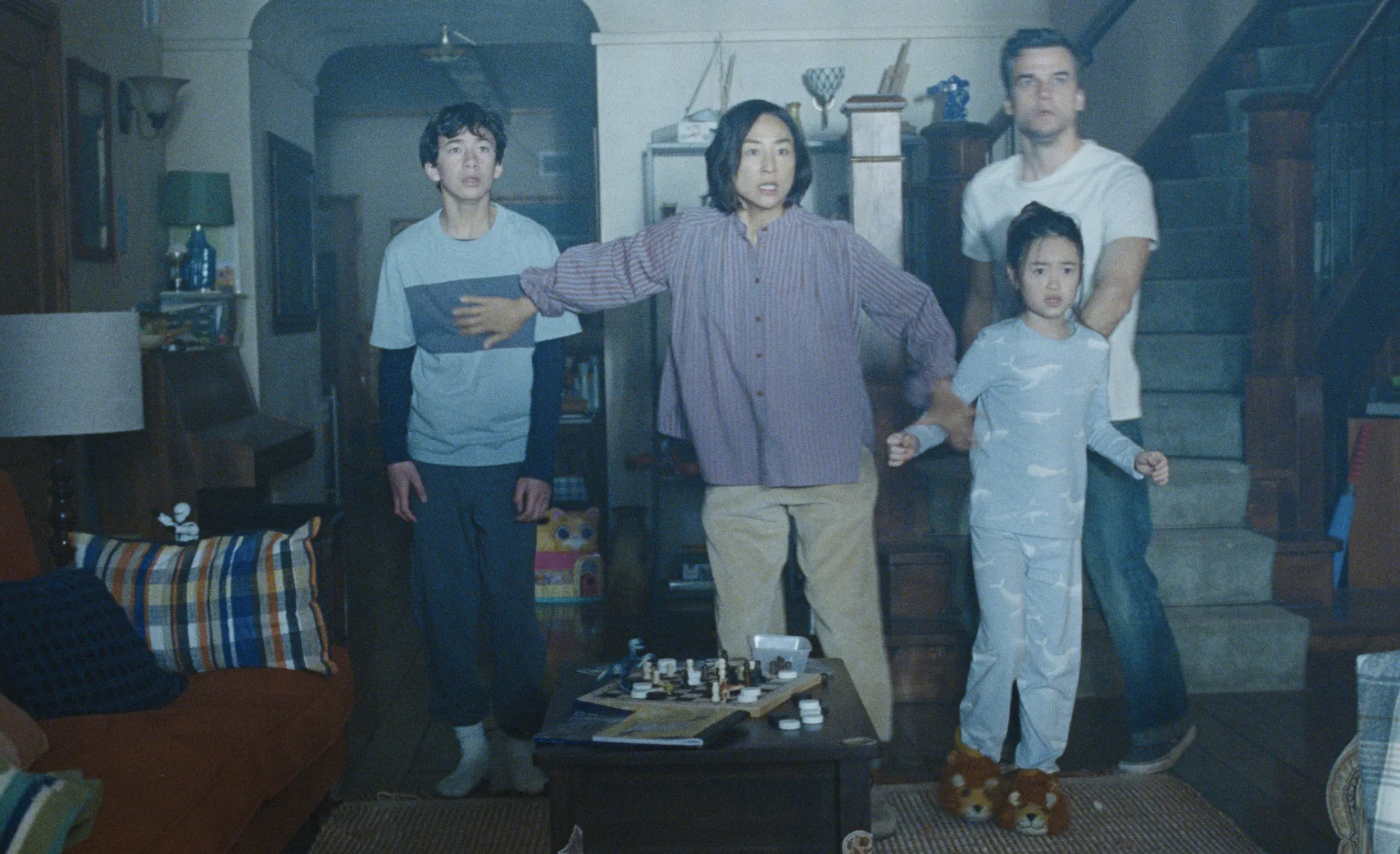
The biggest problem is not the movie’s premise. In fact, that may be the reason so many people watched it in the first place. Jason and Ann Delgado suddenly discover that every exit from their home has been sealed, communications are gone and the same thing appears to be happening throughout their Seattle neighborhood. Nobody knows whether the cause is governmental, extraterrestrial or something stranger.
For a long stretch, the film benefits from withholding that answer. Watching the family ration food, repurpose their home and slowly accept that rescue may never arrive gives The Last House a grounded survival tension. Five years passing inside the same increasingly dismantled house is a strong idea because the mystery remains frightening while the Delgados’ problems stay practical.
The trouble begins when the film finally asks viewers to understand what has been happening. The mysterious force becomes a race of ancient ocean creatures reclaiming a planet damaged by human consumption and climate change. What had functioned effectively as an unexplained nightmare suddenly acquires mythology, and that mythology is not detailed enough to support all the rules the previous 90 minutes have introduced. That is where curiosity begins turning into frustration.
Are the Chimney and Sealed Windows Really Plot Holes?
Some of the movie’s most criticized details are better described as under-explained rules than outright plot holes. Jason cannot smash a window or force open a door because whatever surrounds the house immediately restores or seals those openings. Yet when the already-damaged chimney cap falls away, the resulting hole remains available for years, allowing the family to hunt animals and collect resources.
The production’s intended explanation is that the cracked chimney represents a weakness in an otherwise impenetrable enclosure. The house was already structurally unstable, and the opening is deliberately treated as the one flaw the family’s captors failed to completely control.
That explains what the filmmakers were thinking. It does not entirely solve what viewers see.
If the force can magically repair smashed windows and prevent doors from opening, the movie never establishes why it cannot close a naturally occurring hole in the roof. The chimney can work as a rule, but The Last House needed one small piece of information establishing why existing structural damage behaves differently from escape attempts.
The same problem applies to the sewer system. Ann can eventually crawl through plumbing into another house despite every normal exit being sealed. A reasonable interpretation is that the creatures are controlling above-ground access rather than creating an airtight supernatural bubble around every building. The film simply never defines the boundary clearly enough.
Which Plot Holes Are Harder to Defend?
The final act contains the complaints that are considerably more difficult to explain away.
The house suddenly floods during the confrontation with the creature, then the water drains with striking convenience once the sequence no longer needs it. The characters also manage to execute an elaborate mechanical trap during conditions that make the geography and operation of that trap difficult to follow. Most notoriously, the film stages fire amid a heavily flooded environment in a way that has left viewers questioning what exactly is burning and how.
There is also the communication device used while Ann moves through the sewer system. The world has lost ordinary phone and internet communication, yet the family’s improvised equipment can transmit enough information for the sequence to function. A short explanation that it operates only as a limited local connection would have helped considerably.
None of these details individually destroys the movie. Survival thrillers routinely ask audiences to accept improvised technology and unlikely escapes.
The accumulation is what hurts The Last House. The first half trains viewers to care about food portions, structural damage, medication and other practical survival details. Once a film has asked its audience to pay that much attention to logistics, it cannot suddenly become casual about its own physics without people noticing.
Why Did the Creatures Trap Everyone in Their Houses?
The movie’s thematic answer is much clearer than its practical one.
The creatures are not aliens. They are ancient ocean dwellers that have existed on Earth longer than humanity. Director Louis Leterrier has explained that rising temperatures, pollution and humanity’s treatment of the planet force them out of the oceans. His reversal is that humans are effectively the invaders, while the creatures are taking back their own world.
That helps explain the saltwater rain and why the ending is built around coexistence rather than extermination.
What it still does not clearly explain is why sealing millions of humans inside houses for years is the method they choose.
If the objective is to teach humanity how to share the planet, starving people inside their homes is an extraordinarily indirect lesson. If the objective is simply to remove humans from the environment, the creatures’ willingness to later forgive the Delgados becomes harder to reconcile. They also periodically enter homes and attack, which further muddies whether the confinement is punishment, protection, population control or some form of test.
The director’s explanation gives the creatures a purpose. The screenplay does not give their system enough logic.
Why Does Showing Mercy Suddenly Free the Delgado Family?
Jason captures one of the creatures during the climax and initially prepares to kill it. Ruth, who has spent years interpreting the beings differently from the adults, convinces him that violence may not be the answer. Jason releases the creature, and that act of mercy changes everything.
The creature opens the previously impossible front door. When other creatures surround the family outside, the one Jason spared appears to communicate with them, and the Delgados are allowed to leave.
The thematic intention is straightforward. Jason has responded to every crisis by building, controlling and fighting. Ruth understands something he does not: survival may eventually require coexistence rather than domination. By sparing an enemy when he finally has power over it, Jason demonstrates that humans are capable of changing. As an emotional conclusion, that is defensible.
As monster mythology, it feels abrupt. The film spends far more time establishing the creatures as lethal threats than suggesting they are evaluating human morality. Ruth’s intuition hints at another possibility, but there is not enough groundwork to make the final exchange of mercy feel inevitable rather than convenient.
The ending does make sense. It just arrives at that meaning faster than the story earns it.
Did Cassidy’s Death Make the Backlash Worse?
The death of the family’s aging dog, Cassidy, has become another major source of viewer anger, although it is not really a plot problem. Cassidy requires medication that eventually runs out during the family’s years of captivity. When the dog dies, the film takes the survival scenario into particularly grim territory, including Jason preserving the body when the family is desperate for food.
Greta Lee and Wagner Moura were aware that the sequence would provoke a strong emotional response. The filmmakers clearly wanted it to demonstrate how far ordinary family life has deteriorated after years of isolation.
For some viewers, it works exactly that way. For others, it feels like misery added primarily for shock.
The distinction matters because disliking what happens to Cassidy is not evidence that the screenplay makes no sense. It is evidence that The Last House deliberately crosses a line many viewers are particularly sensitive about.
Is There Anything The Last House Actually Does Well?
Quite a lot, especially before the final third.
Moura gives Jason enough stubbornness and desperation to prevent him from becoming a generic survival-movie father, while Lee keeps Ann from disappearing behind his increasingly obsessive efforts to control the situation. Their best scenes are not monster attacks. They are the smaller moments in which years of confinement alter how husband, wife, parents and children relate to one another.
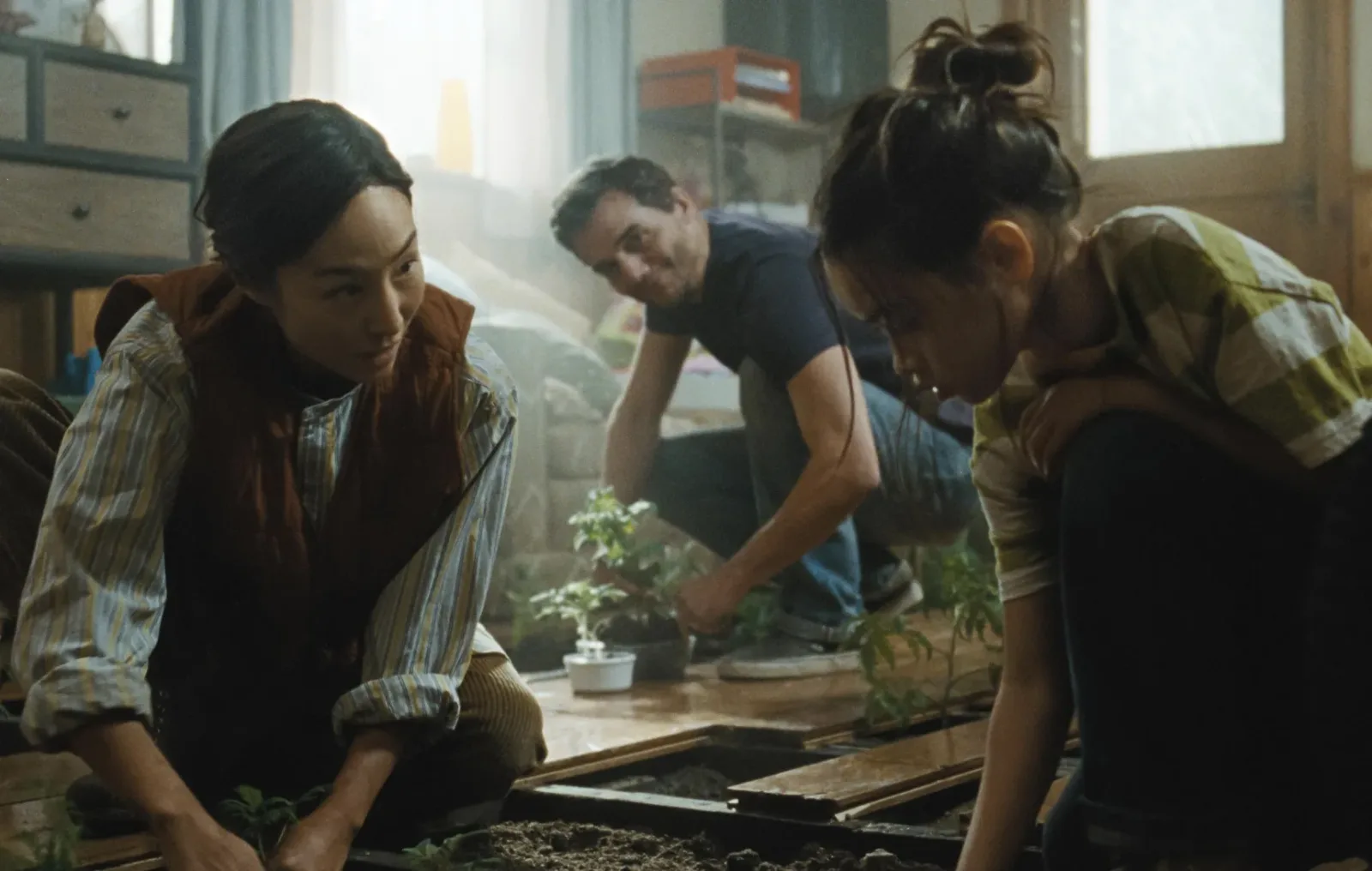
The physical survival material is also unusually detailed. The production brought in a survival consultant, and much of the family’s adaptation is built around shelter, water, food and repurposing household materials. Jason’s “chimney fishing,” Ann’s indoor crops and the gradual stripping of the house make the five-year time jump feel physically visible rather than merely announced.
Even the creature work deserves more credit than some of the reaction suggests. A practical silicone creature was used inside the flooded set before visual effects enhanced it, and Leterrier intentionally keeps the beings visually difficult to categorize.
The problem is that the movie’s strongest material creates expectations its finale cannot quite satisfy.
So, Is The Last House Really That Bad?
No, but the bad reviews are understandable. The Last House is not an incoherent movie with no ideas behind it. Its environmental allegory has a clear intention, the creatures have an established origin, the chimney has an intended explanation, and Jason’s decision to show mercy completes a recognizable character arc. What the film lacks is connective tissue.
Too many important rules have to be explained after the fact by the filmmakers or inferred generously by viewers. Why the creatures choose houses as prisons, exactly how the sealing force works, why certain openings remain usable, how the final flood behaves and why one merciful act overrides five years of captivity are questions the movie either answers vaguely or not at all.
That makes the backlash different from simple review-bombing. Critics and viewers are arriving at many of the same frustrations independently.
Yet its enormous Netflix audience also tells us something. A 27.5-million-view debut does not mean 27.5 million people loved the movie, but it does prove that the premise connected strongly enough to attract them. Some viewers have even described enjoying it precisely because of its strange choices, treating it as an entertainingly ridiculous B-movie rather than failed prestige science fiction.
That may be the fairest place to leave The Last House. It is not nearly as smart as its first hour makes it look, and its finale asks a simple message about coexistence to carry too many unresolved mechanics. But the survival story, central performances and sheer weirdness keep it from being the disaster its lowest ratings imply.
The frustrating part is not that The Last House has nothing going for it. It is that for a while, it looks like it might have everything.