Netflix’s Pedro Páramo Movie Recap and Ending Explained
Juan Preciado dies in Comala among its ghosts. Full recap and ending explained for Rodrigo Prieto's 2024 Netflix adaptation of Juan Rulfo's novel.
Full spoilers follow for Pedro Páramo (2024), including the ending.
Juan Preciado does not make it out of Comala. He dies of fright among the town’s ghosts, and his soul takes its place in a village populated entirely by the dead. Pedro Páramo, the rancher and landowner he traveled to find, was already gone, stabbed years earlier by Abundio Martinez, one of the many illegitimate sons he fathered and never acknowledged. The same Abundio who escorted Juan into Comala at the film’s opening is the man who killed his father. That circularity is the engine the film runs on.
Juan Preciado Arrives in a Town of the Dead
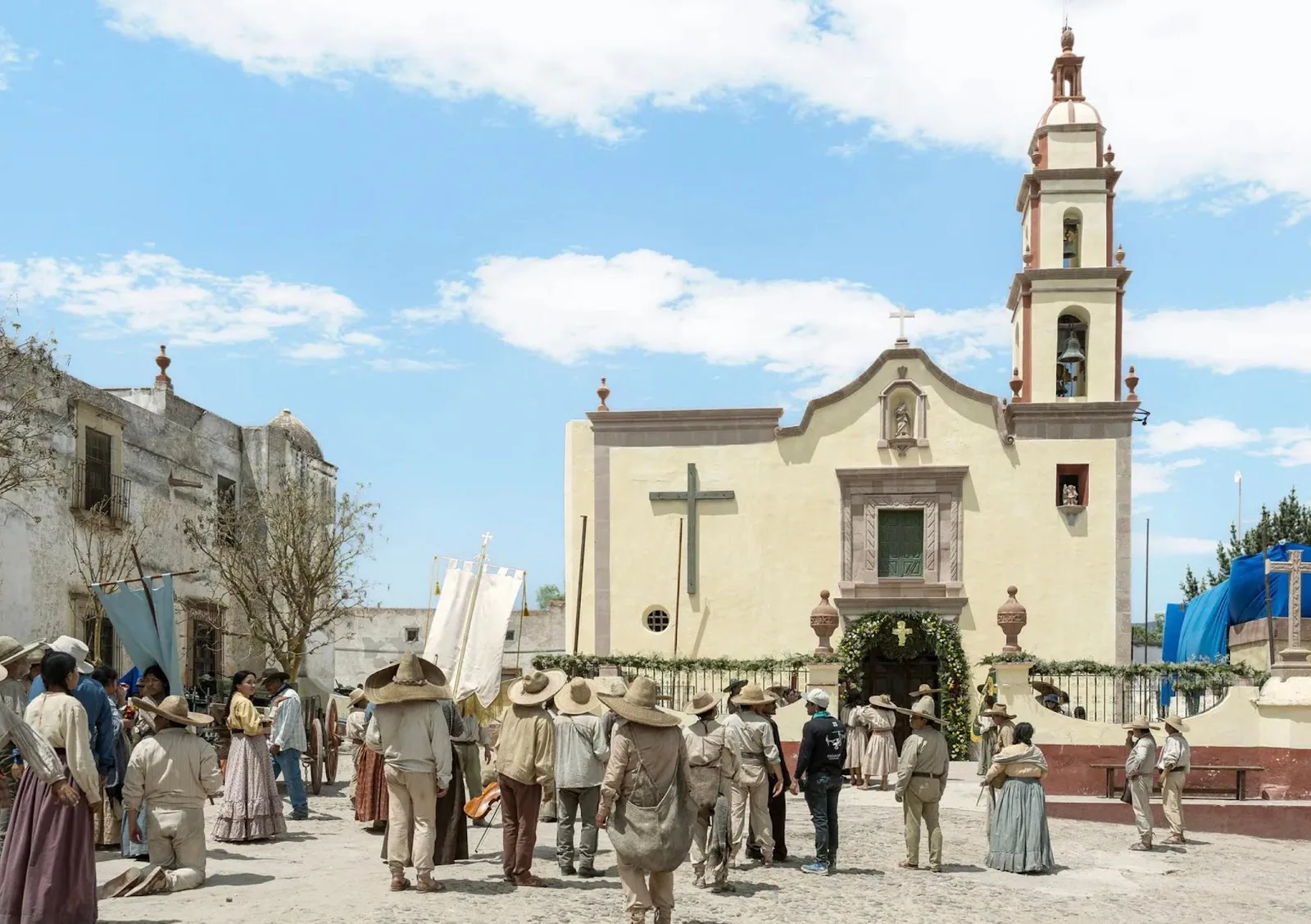
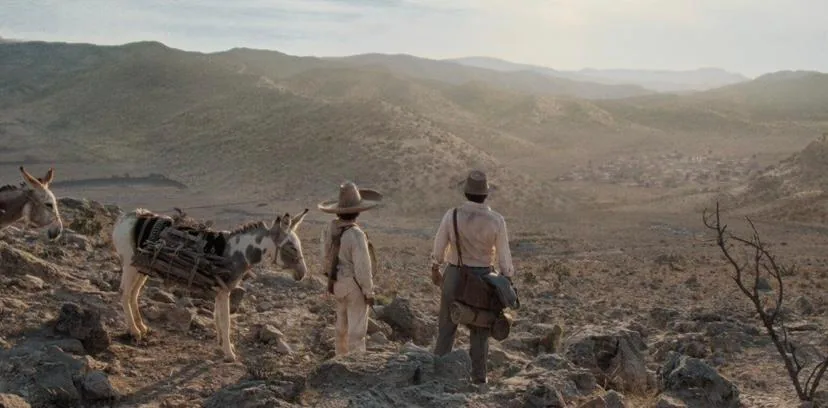
Juan Preciado (Tenoch Huerta, Black Panther: Wakanda Forever) arrives at Comala to find ruins where his mother remembered orchards. He had made a deathbed promise to his mother, Dolores (Ishbel Bautista), to travel to her hometown and confront the father who abandoned them. Before he even reaches the village, a man named Abundio Martinez delivers the first shock: Pedro Páramo is dead, killed long ago by Abundio himself.
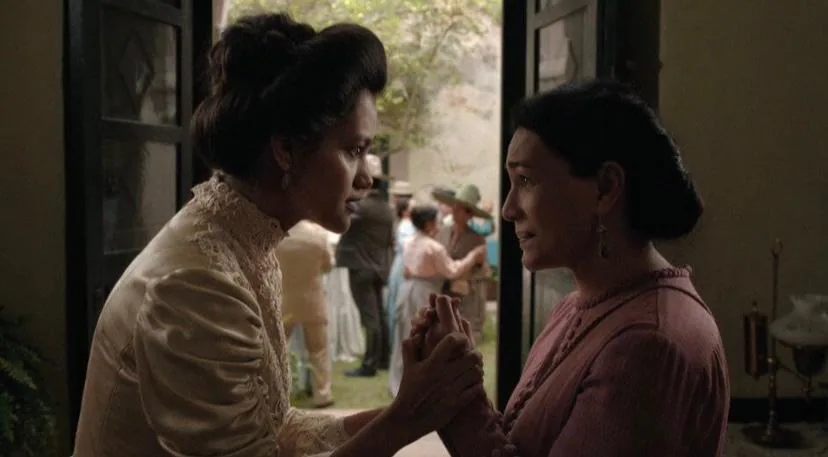
Inside the emptied town, Juan encounters what appear to be living residents. Among the first is Eduvigues (Dolores Heredia), who tells him she is the only one left and claims she heard Dolores calling out to her at the moment of death. Juan gradually understands that Eduvigues is also dead. Every person he meets is a ghost, and the stories they tell him layer the film’s nonlinear structure, building a portrait of a man who was never present but whose damage outlasted him.
How Pedro Páramo Took Control of Comala
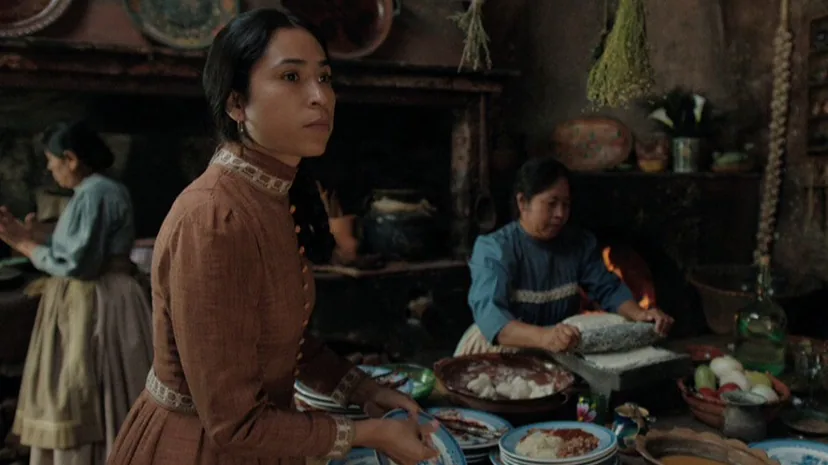
Pedro Páramo (Manuel García-Rulfo, Netflix’s The Lincoln Lawyer) built his control over Comala through debt manipulation, murder, and the relentless work of his estate administrator Fulgor Sedano (Héctor Kotsifakis). Pedro inherited a ruined estate and a mountain of family debts. Fulgor arranged land grabs, orchestrated the murders of neighboring landowners, and brokered alliances on Pedro’s behalf. One of Fulgor’s first assignments was courting Dolores, Juan’s mother, on Pedro’s behalf, not from any affection but to cancel the debt Pedro owed her family. Once Dolores gave birth to Juan, Pedro sent them both away.
His son Miguel was raised with the same disregard for anyone outside the ranch and became a predator in his own right across the region. Pedro answered complaints about Miguel by buying silence. When the Mexican Revolution brought armed groups through Comala, Pedro played both sides, dispensing just enough cooperation to protect the Media Luna ranch while expanding his holdings. Fulgor, who had carried out the bloodier work of that expansion for years, was eventually killed by the revolutionaries.
Susana San Juan and the Obsession That Broke Comala
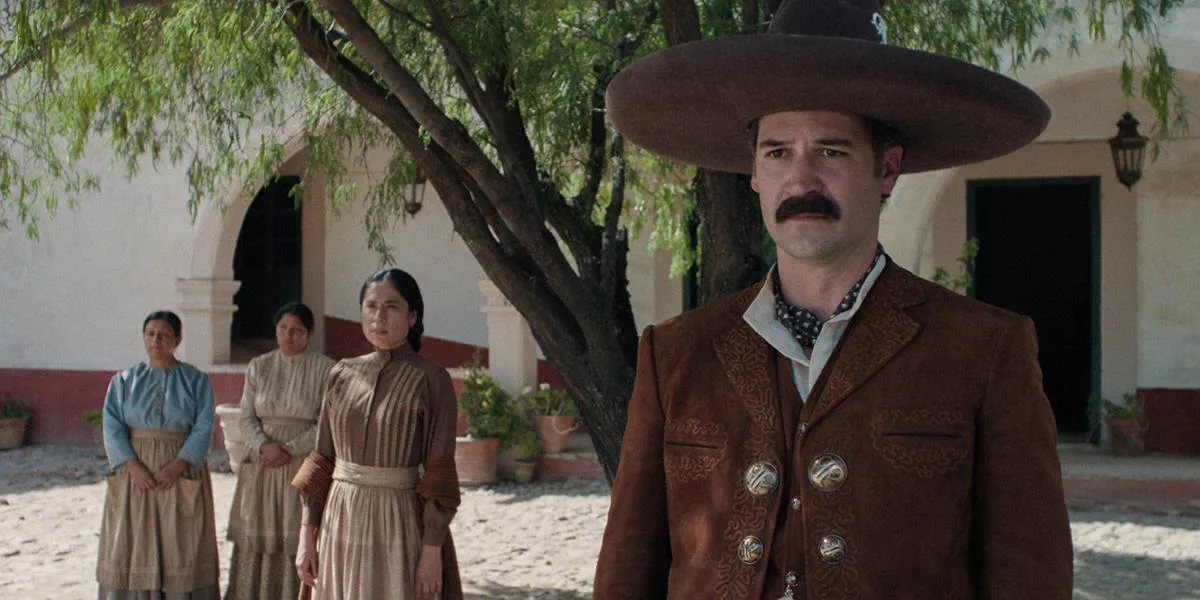
Susana San Juan (Ilse Salas) is the one person in the film Pedro cannot possess on his own terms, and that failure destroys him. His childhood love left Comala with her father Bartolomé, and Pedro spent years directing his men to find her. When Pedro’s men located Bartolomé and Susana and brought them to Comala, Pedro arranged housing for them and pressed for Susana’s hand in marriage. In scenes where Susana speaks of Bartolomé, the film implies he may not have been her biological father and that he exercised a controlling hold over her. After Susana moved in with Pedro, Bartolomé was sent back to the Andromeda mine by Fulgor’s arrangement and died there.
Susana came to Pedro already fractured. She was haunted by her late husband’s spirit and by her memories of the mine. Pedro had no means of reaching her. His version of love was possession, and Susana slid further into madness, refusing last rites when she died. When the church bells rang so long after her death that the townspeople began celebrating, mistaking the sound for a feast day, Pedro vowed revenge on Comala itself. From that point he stopped managing the town, stopped supplying it, and left it to hollow out.
Comala as Purgatory: Why the Souls Cannot Leave
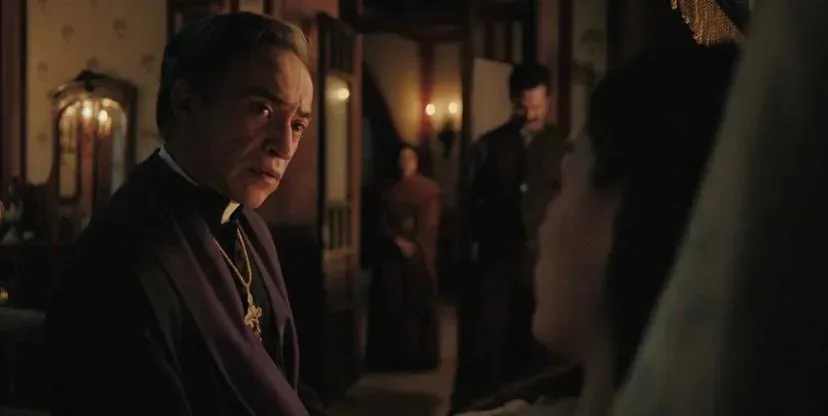
Comala holds its dead in place because the Catholic priest who might have released them, Father Renteria (Roberto Sosa), systematically denied absolution to the poor while selling it to the rich. He condemned Eduvigues for suicide and denied Heaven to Dorotea (Giovanna Zacarías), a woman who had procured girls for Pedro’s son Miguel in exchange for food. When Miguel himself died, Renteria blessed him after Pedro paid. Souls denied that absolution stayed tethered to Comala, unable to pass on.
Juan moves through this purgatory meeting one trapped spirit after another. As the encounters multiply and floating corpses appear in the town square, his mind cannot hold what he is seeing. He collapses and dies from fright. His body is buried alongside Dorotea, and it is in this shared grave that the film’s second layer of narrative operates: Juan is now dead, and Dorotea recounts to him the full story of Pedro, Susana, and the town’s evacuation by the living.
Who Killed Pedro Páramo?
Abundio Martinez, one of Pedro’s many unacknowledged illegitimate sons, stabbed him to death outside his own home. Abundio’s wife had just died, and he came to Pedro drunk and desperate, needing money for the burial. Pedro and his caretaker Damiana (Mayra Batalla) turned him away. Abundio stabbed Pedro. Damiana, herself already a ghost by that point in the film, witnessed it and could not intervene.
The structure the film builds around this death is specific. Abundio is the first person Juan meets on the road to Comala, the guide who walks him into the ghost town. He is also the killer. The son Pedro abandoned became the instrument of his death, and the other abandoned son, Juan, arrives too late to find him and ends up among the dead himself.
What the Ending Means
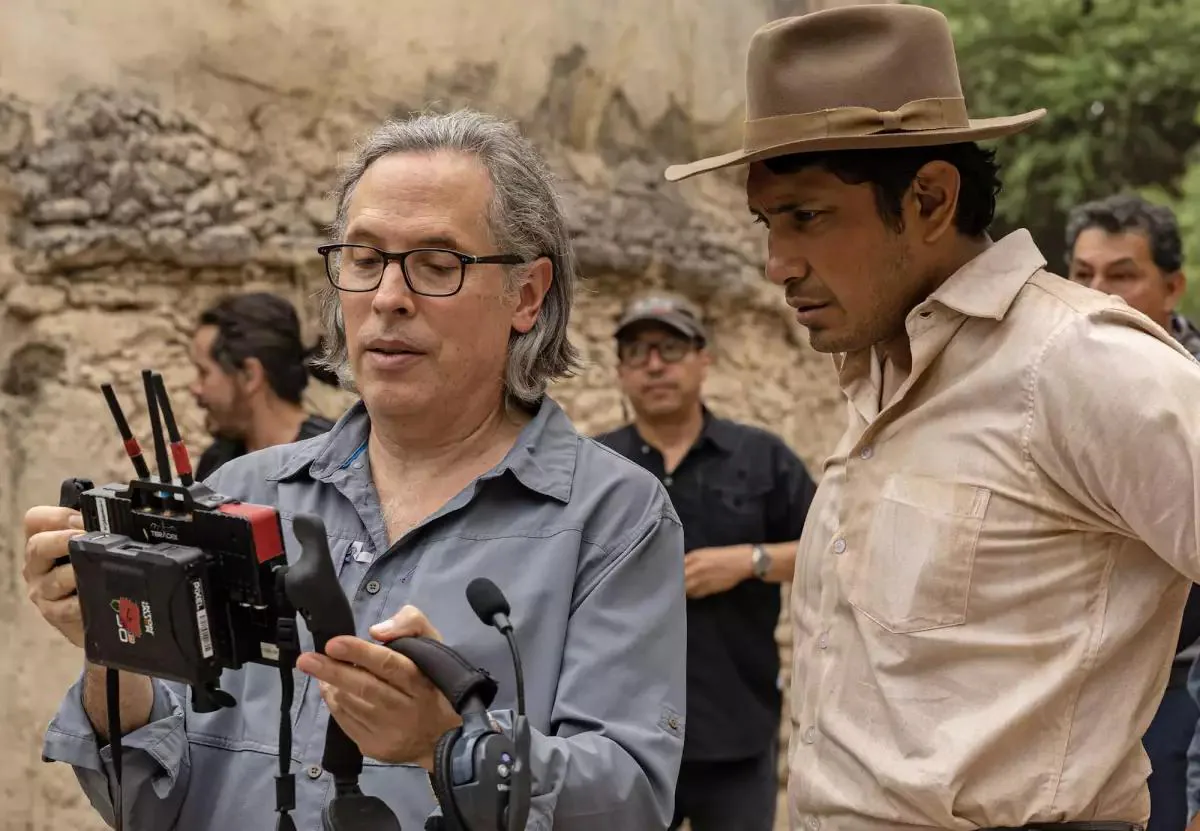
The film’s final image of Juan and Dorotea lying in their shared grave is not a resolution. They are not at rest. They are part of the same spiritual inventory as every other soul in Comala: trapped by unresolved sin, denied absolution, and abandoned by the living structure that might have released them. Rodrigo Prieto, making his feature directorial debut after a career as cinematographer on films including Brokeback Mountain, The Wolf of Wall Street, and Killers of the Flower Moon, described the intergenerational theme as personally central to why he made the film and said he hoped the story would read as a universal search for identity, per Netflix production notes published at the start of production.
Knowing that Abundio guided Juan into Comala and killed Pedro reframes the entire structure. Every soul trapped in the ghost town was someone Pedro encountered and discarded: sons, a wife, a love, an entire village. Our reading is that Comala is not a supernatural punishment delivered from outside. It is the accumulated residue of deliberate choices, each made without consequence to the man making them, until the consequences arrived in the form of the son he never knew.