Knock at the Cabin Filming Locations: Where Is the Cabin?
The remote vacation home in M. Night Shyamalan’s Knock at the Cabin is supposed to feel cut off from civilization, leaving Andrew, Eric, and Wen with almost no way of knowing whether the terrifying claims made by their four visitors are actually true. The production achieved that isolation in South Jersey’s Pine Barrens, but the…
The remote vacation home in M. Night Shyamalan’s Knock at the Cabin is supposed to feel cut off from civilization, leaving Andrew, Eric, and Wen with almost no way of knowing whether the terrifying claims made by their four visitors are actually true. The production achieved that isolation in South Jersey’s Pine Barrens, but the cabin viewers see in the movie was actually split between two different sets.
Most of the location filming took place in Burlington County, New Jersey, particularly around Tabernacle and Southampton. The production then crossed into Pennsylvania for controlled studio work and several flashback sequences. Principal photography took place in spring 2022, with the New Jersey Department of State confirming that much of the movie was filmed in Tabernacle and at the Evergreen Dairy Bar in Southampton.
The Cabin Exterior Was Built in Tabernacle, New Jersey
The most important filming location was Tabernacle Township in Burlington County, deep within New Jersey’s Pine Barrens.
Rather than finding an existing vacation cabin and adapting it for the movie, production designer Naaman Marshall and his team constructed a full-size cabin specifically for filming. Production materials identify the site as a working cranberry farm in the Pine Barrens, while reporting from The Philadelphia Inquirer places the structure in the woods near Moore’s Meadow Blueberry & Cranberry Farm.
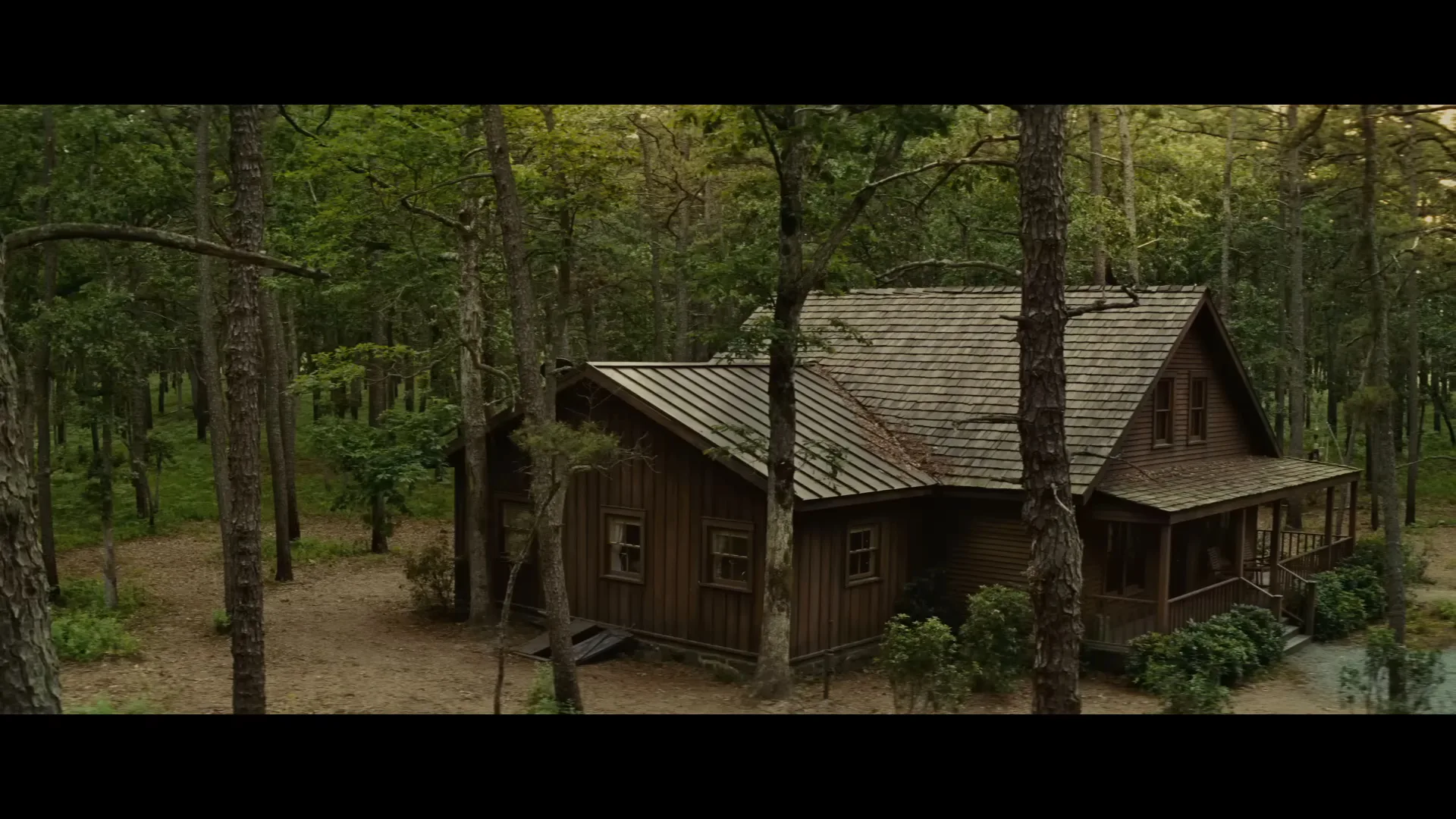
The cabin had to look permanent even though it existed for the production. Architectural plans were prepared and approved, and the structure was completed in approximately three weeks. That gave Shyamalan control over the building’s appearance while allowing the surrounding woods to remain authentic.
The Pine Barrens were particularly effective for the story because the area can feel remarkably isolated despite being within reach of Philadelphia. Shyamalan has said he was drawn to the mysterious quality of the landscape, although the famous Jersey Devil folklore associated with the Pine Barrens did not directly influence Knock at the Cabin.
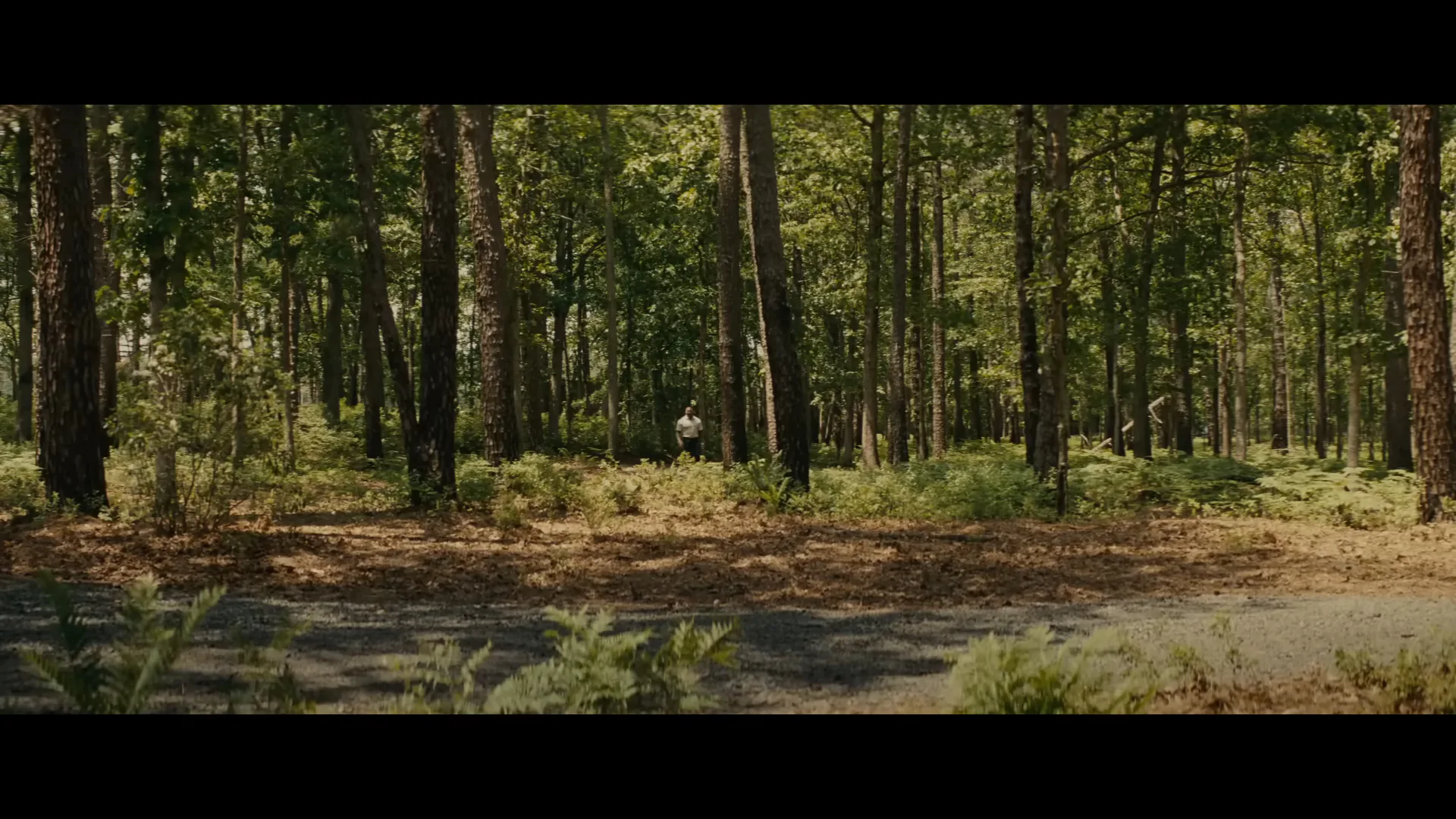
It is this Tabernacle set that viewers see whenever the movie shows the cabin sitting in the forest or characters moving around its exterior.
Also Read: The Arena Filming Locations
The Cabin Interior Was a Completely Different Set
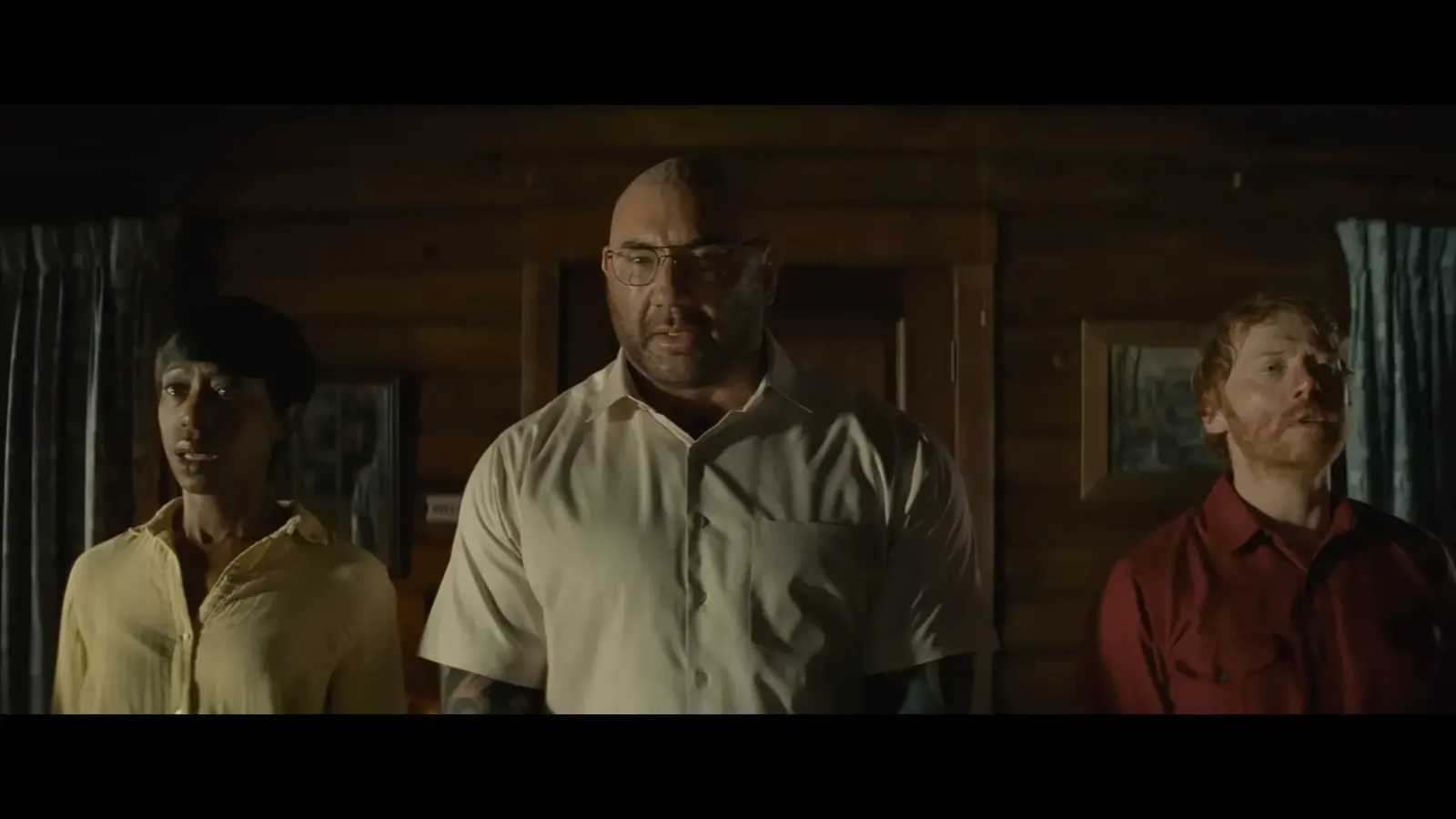
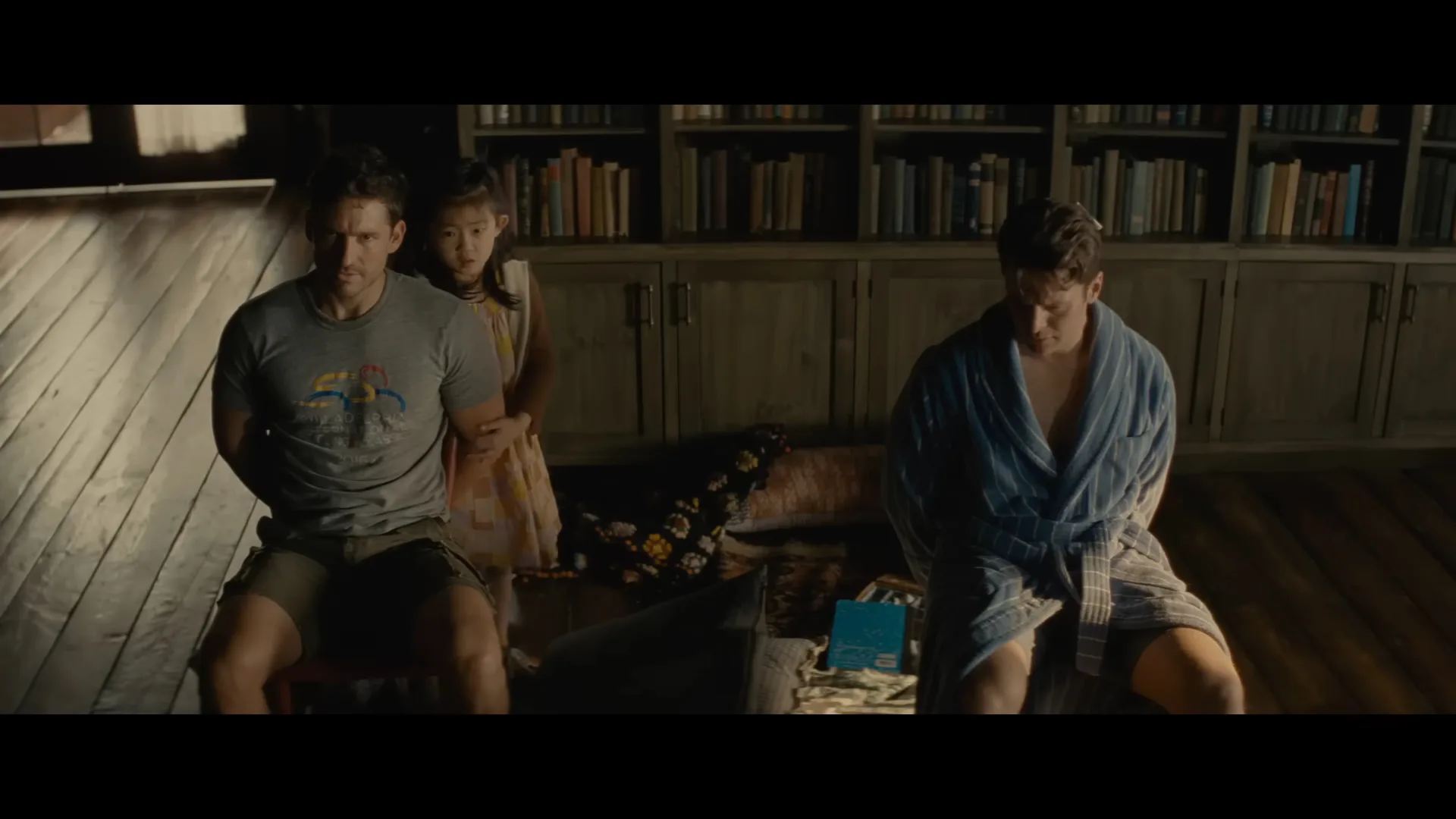
The inside of the cabin was not filmed inside the full-size structure in Tabernacle. The production constructed a second version of the cabin on a soundstage. Author Paul G. Tremblay visited the production and recalled being surprised by how convincing the interior was, explaining that the second cabin had been built inside a warehouse so the filmmakers could control the changing light rather than depending on actual sunsets and weather conditions.
Cinematography records identify Sun Center Studios in Aston, Pennsylvania, as an important base for the production before filming moved to the Pine Barrens. The studio is located at 250 N. Commerce Drive in Aston, in Delaware County rather than Philadelphia proper.
The filmmakers went to unusual lengths to make the studio cabin match the real exterior. A detailed lighting study was carried out at the New Jersey cabin, photographing the views and natural light around its windows and doors over the course of a day. Those images helped the crew recreate the same environment on the soundstage.
Production designer Naaman Marshall’s team also created a custom backdrop approximately 30 feet high and 350 feet long using imagery of the actual location. The result allowed scenes filmed indoors in Pennsylvania to appear as though the actors were still sitting inside the cabin surrounded by the Tabernacle woods.
Why the Cabin’s Lighting Looks So Natural
The artificial interior is particularly difficult to spot because cinematographers Jarin Blaschke and Lowell A. Meyer designed the cabin’s lighting around the progression of one day.
Shyamalan divided the story’s cabin scenes into different phases of daylight, including afternoon, late afternoon, sunset, dusk, morning, and the gloomy conditions accompanying the final stage of the apocalypse. The stage was largely illuminated from outside the cabin rather than with obvious fixtures positioned around the actors.
Shyamalan has explained that the approach made the interior feel as though it had genuinely been photographed on location. Blaschke handled most of the interior work, while Meyer was responsible for much of the exterior photography as well as later pickups and additional material.
That technical choice is important to the finished movie. Much of Knock at the Cabin takes place inside a single building, so any visible difference between the exterior cabin and the stage set could have broken the illusion.
Instead, the audience feels trapped in the same location even though production was moving between two states.
Evergreen Dairy Bar Became Angie’s Roadside Diner
Another genuine South Jersey location appears near the end of the movie. The Evergreen Dairy Bar on Route 70 in Southampton Township was transformed into “Angie’s Roadside Diner” for filming. The long-running local restaurant and ice cream shop already had the vintage roadside appearance Shyamalan wanted, so the production was able to use its existing character rather than constructing a diner from scratch.
The location becomes especially important after Andrew and Wen leave the cabin. Inside the diner, they finally encounter independent news reports confirming that the disasters affecting the world have begun to stop.
Shyamalan said he was struck by the Evergreen Dairy Bar’s preserved 1950s and 1960s atmosphere, which fit his desire to give the film a slightly timeless quality.
For viewers interested in visiting a recognizable Knock at the Cabin location, Evergreen Dairy Bar is far more practical than searching for the cabin itself. The cabin was a purpose-built film set on private property, while the Southampton restaurant is a real operating business.
The China Flashbacks Were Filmed in Chester, Pennsylvania
The movie also leaves the cabin for flashbacks showing important moments in Andrew and Eric’s relationship, including their experience meeting baby Wen in China. Those scenes were not filmed overseas.
The production took over an abandoned hospital in Chester, Pennsylvania, near the Delaware border. Production designer Naaman Marshall’s department transformed the building into four different environments, including two sets representing locations in China.
Shyamalan explained that the unusual architecture of the hospital gave the designers a foundation they could reshape into another country. Details including corridors, ceilings, wall patterns, and set dressing were altered to make the same abandoned facility serve several different purposes.
This is a more accurate description of the movie’s Pennsylvania filming than simply saying that it was shot “in Philadelphia.” Much of the Pennsylvania production took place in the greater Philadelphia region, particularly at Sun Center Studios in Aston and the abandoned hospital in Chester.
Was Knock at the Cabin Filmed in Philadelphia?
The Philadelphia area was an important production base, but most of the movie’s best-documented physical locations are outside Philadelphia city limits.
The principal cabin exterior was in Tabernacle, New Jersey. The diner was in Southampton, New Jersey. The studio where the cabin interiors were created was in Aston, Pennsylvania, and the hospital used for flashback sets was in Chester. Cinematography coverage sometimes describes Sun Center Studios broadly as being in Philadelphia, which helps explain why numerous location guides list “Philadelphia” as a filming location.
Shyamalan has long based much of his filmmaking career around the Philadelphia region, so Knock at the Cabin continues that pattern even though South Jersey provides its most recognizable landscape.
The production began shooting in spring 2022 and wrapped its principal New Jersey work by June. Additional photography was conducted later after test screenings, according to cinematographer Lowell A. Meyer.
The combination of the Pine Barrens and controlled Pennsylvania stages ultimately gives the film its unusual visual character. The woods are genuine, the exterior cabin was genuinely standing among them, but the claustrophobic room where most of the story unfolds was an elaborate illusion built miles away.