How does Mia’s identity crisis impact her relationship with Emil in Netflix’s A Copenhagen Love Story?
The fertility process strips away the writer Mia was before IVF, and the book she writes during treatment nearly destroys her relationship with Emil.
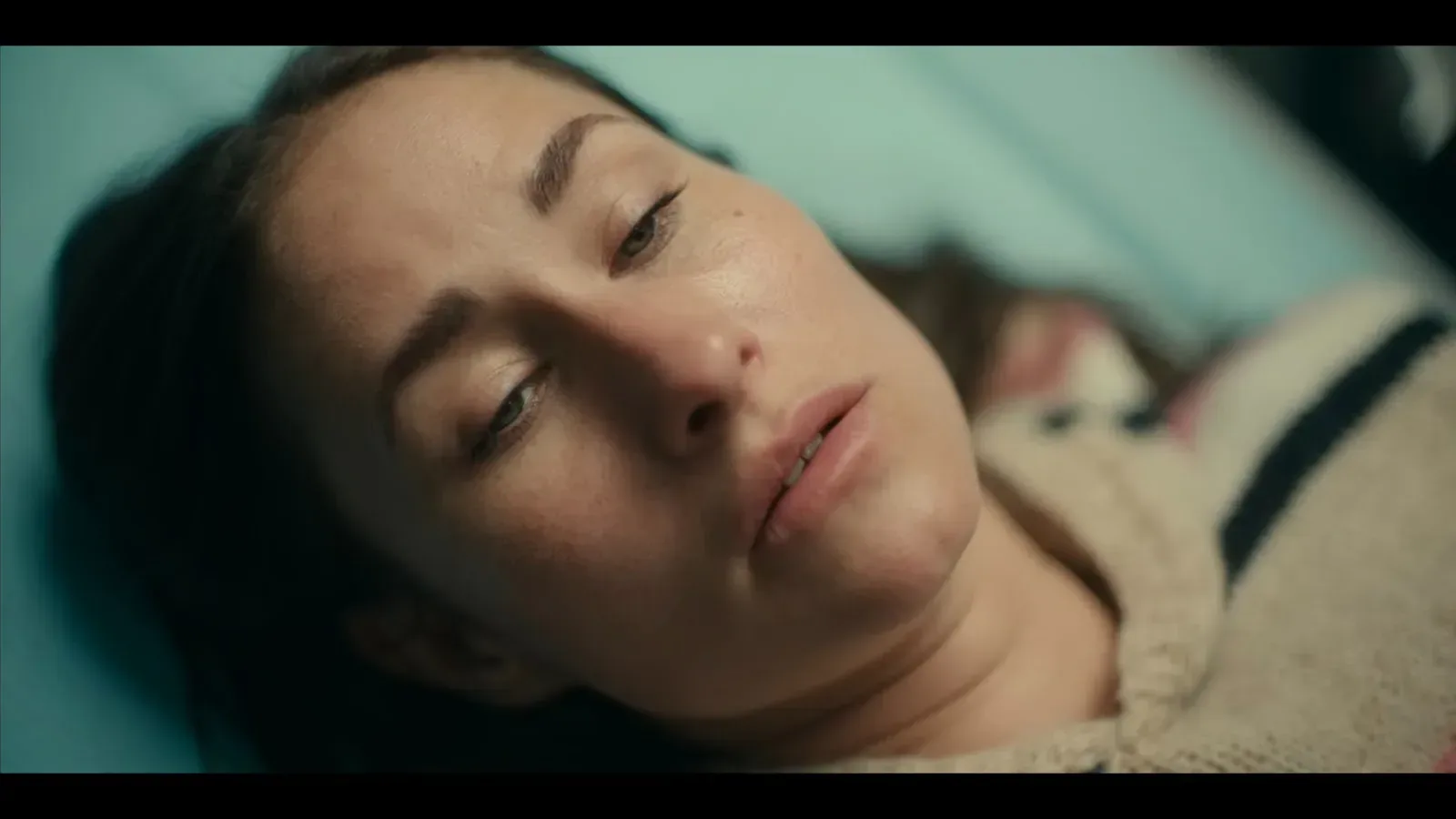
Spoiler warning: This article discusses plot developments through the film’s ending, including the outcome of the couple’s final IVF attempt.
Mia’s fertility struggle does not simply add conflict to her relationship with Emil. It dismantles the identity she had built before she met him, and her attempt to reclaim herself through writing about the experience is what brings the relationship closest to permanent collapse.
Who Mia Is Before She Meets Emil
The film opens with Mia (Rosalinde Mynster) riding the success of her novel “Tour de Force,” a book about the difficulties of being a single Copenhagen woman that connected with readers through what reviewers have described as relatable and raw writing. She has built a public persona around that freedom: vivacious, eclectically dressed, casually dating younger men.
The introduction to Emil (Joachim Fjelstrup) is arranged by Mia’s friend Gro (Sara Fanta Traore) at a book launch. Emil is Gro’s upstairs neighbor, a divorced museum archaeologist with two young children. Mia’s hesitation is not hard to read. A divorced father with kids represents the kind of permanence she has spent her career writing around.
How the Fertility Process Reshapes Her
The IVF protocol strips away the version of Mia that existed before treatment. After nine months of unsuccessful natural conception, tests reveal Emil’s sperm count has declined, and they move to a regimen of injections, hormone treatments, and scheduled sex that reorganizes their daily life around the next cycle. Directors Ditte Hansen and Louise Mieritz, who also wrote the screenplay, show the psychological cost in detail. The induced menopause side effects alter Mia’s mood and behavior.
What the film tracks is not only grief but the erosion of self. The spontaneous humor and eccentric fashion disappear. The woman who wrote “Tour de Force” out of lived experience finds herself unable to access the version of herself that produced that work. SheThePeople’s analysis of the film traces the transformation across scenes: the vivacious writer of the film’s opening becomes dull and self-conscious.
Every pregnancy announcement from friends, including Gro’s circle, reinforces the gap between where Mia expected to be and where she is.
What the Pressure Does to Emil and the Children
Emil functions as the stable counterweight throughout. He is emotionally patient and remains present even as the treatment strains their intimacy and makes sex feel mechanical. His steadiness, however, can read from inside Mia’s crisis as evidence that he does not fully understand what she is experiencing.
His children from his previous marriage are named Selma and Felix. Leisurebyte’s review notes that Mia bonds with them genuinely, filling a parental role that reads as natural rather than forced. That bond is real, but it coexists with the ache of what she cannot have biologically, and the combination is difficult to hold.
The damage surfaces most clearly at a dinner where Mia discloses Emil’s low sperm count to friends without his consent. Emil tells her plainly that he does not want his private medical situation to become public knowledge. It is one of the first moments where her attempt to process her own pain uses his vulnerability as material.
The Book, and Why It Threatens the Relationship
Mia begins writing a second book during IVF. The intent, as the film presents it, is to document the experience from inside it, because she believes she cannot be fully honest looking back. The result, per SheThePeople’s analysis, is “bitter and cynical” compared to her earlier work.
Emil discovers the manuscript. He is troubled by how she has depicted him in it. He tells her he does not want the world to learn about his fertility issues through her writing. The conflict crystallizes something that had been building: Mia’s writing, which had always been her means of understanding herself and connecting with readers, has become a betrayal of the person she is closest to.
A public interview scene offers an alternative version of what that openness could look like. When Mia unexpectedly speaks about fertility in front of an audience, the response she receives, the number of women who recognize themselves in what she describes, suggests there is a version of this story she could tell that does not require exposing Emil. The scene offers a temporary anchor before things deteriorate further.
The Halloween Scene and the Separation
The breaking point is a Halloween gathering. Mia’s distress becomes visible to Emil’s children in a way that frightens them. Emil spends that night with Selma and Felix rather than with Mia. From her perspective, this reads as confirmation of a fear she has been carrying: that she is not, and will not be, first.
She ends the relationship and leaves. The breakup is not Emil walking away. Mia removes herself before a rejection she was certain was coming.
What Separation Reveals, and How It Ends
During the time apart, Mia re-enters the dating scene. A comment from a new date, who says her ex must have been foolish to let her go, stops her. The premise is wrong. She was the one who left. That inversion makes it clear she walked away from someone who had stayed through the hardest version of her.
She returns to Emil. He tells her he never realized how deeply she had suffered, and that he loved her even at her worst. They reconcile and attempt IVF one final time. The clinic’s protocol, as DMTalkies describes it, is that a phone call from the clinic means failure and silence means the procedure succeeded. When 9:30 AM passes without a call, Emil phones to confirm: fertilization has worked.
The film ends with the blended family together. What the ending does not resolve is the book Mia wrote during treatment. Emil’s objection to being written about, and Mia’s need to write through difficulty, are not dissolved by the pregnancy. Whether those two things can coexist is a question the film raises without answering it for her.