Is A Statement Movie Based on a True Story? The 1980 Workshop Behind the Film
Tom McCarthy's film draws on a real Florida meeting. The surviving workshop records help explain what the participants were trying to agree on.
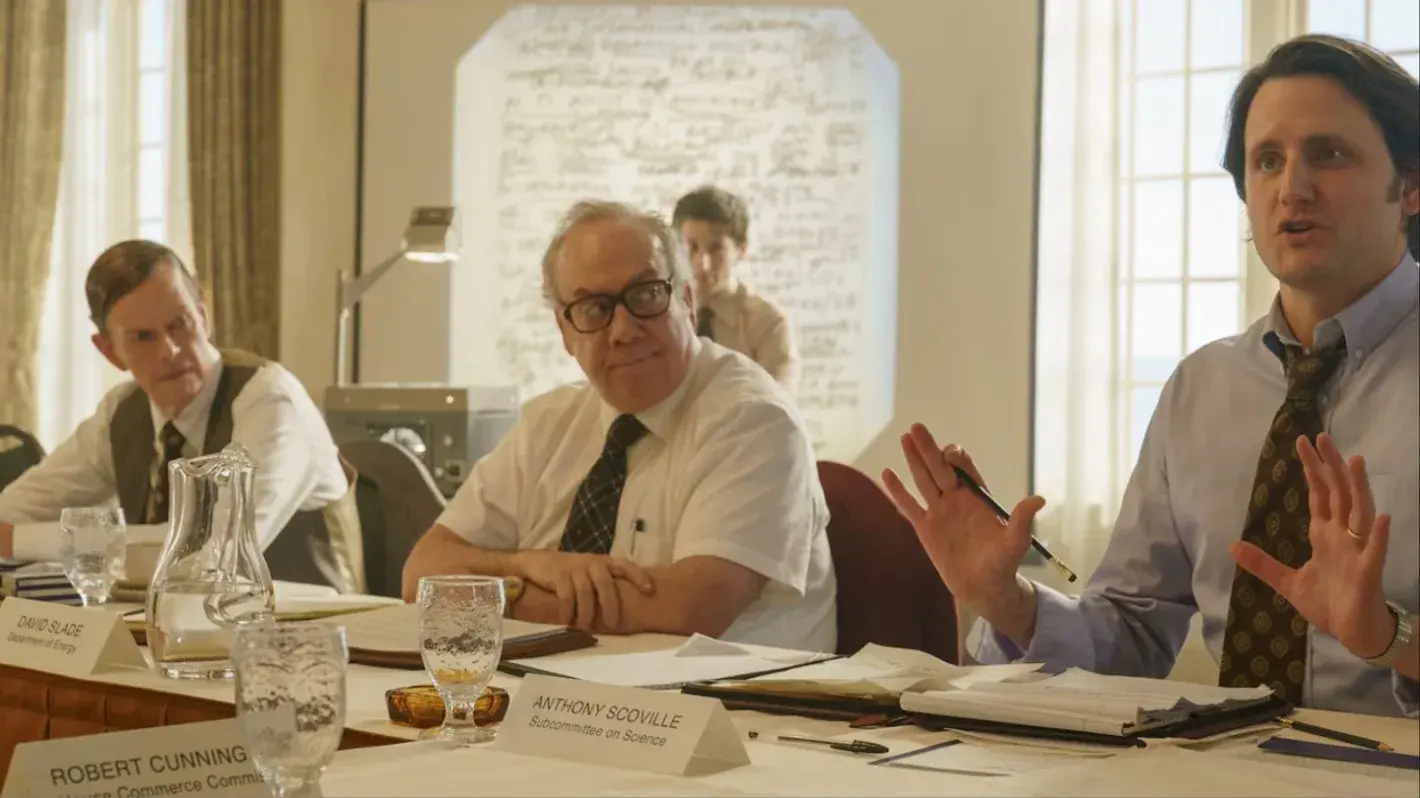
A Statement brings Tom McCarthy back to a story about people trying to turn difficult information into something the public can understand. The new film, featuring Paul Rudd, Amy Ryan and Paul Giamatti, has reached the New York Film Festival. Its premise sounds deceptively manageable: gather experts at a Florida resort and ask them to agree on one statement.
That assignment raises a question beyond whether the ensemble makes an entertaining film. What happened at the meeting, and how much of the historical record sits behind the drama? The available documents offer a more specific starting point than a general claim that a movie was inspired by real events.
Is A Statement based on a real meeting?
Yes. The film recreates an October 1980 gathering in St. Petersburg, Florida, involving scientists, environmental activists and policymakers. Producer Aloe Entertainment describes a group of 20 experts tasked with producing a recommendation about carbon dioxide emissions and climate change. Their assignment concerned what policymakers should do, rather than simply holding a discussion for its own sake.
Film at Lincoln Center says the conference transcription helped build the screenplay. That establishes a documentary foundation, but it does not make every scene a verbatim record. A transcript records what people said; a screenplay also decides what to select, emphasize and place alongside other material. The festival description alone cannot settle those choices.
Also Read: Is Vigil Season 3 Based on a True Story? The Real Svalbard Conflict Explained
What happened at the 1980 workshop?
A contemporary account supplies the precise dates: October 30 and 31, 1980. The February-March 1981 CO2 Newsletter reproduced excerpts from a summary prepared for the National Commission on Air Quality by Schwartz & Connolly. It describes a meeting about whether, and when, public policy should address the consequences of increasing atmospheric carbon dioxide.
The commission itself was a federal body established under the 1977 Clean Air Act amendments and chaired by Senator Gary Hart. According to the National Archives, it submitted its final report, To Breathe Clean Air, on March 3, 1981. That wider institutional history matters: this Florida workshop was part of a policy process, rather than a standalone gathering that invented the subject.
Did the participants agree on a statement?
The surviving paper trail includes a marked-up draft of the workshop findings and recommendations. A scan preserved in a Massachusetts court filing contains underlining and crossed-out wording, including proposed changes to descriptions of climate models. It is evidence of a document being revised, not proof that every proposed change was adopted. Its presence in a later filing also does not turn the historical text into a court ruling.
The marked draft describes its findings as a general consensus while allowing that participants may disagree with particular points. The newsletter summary also records dissent and says most participants favored some action in the near term, while a smaller group disagreed. A document could therefore emerge from the meeting without representing identical views around the table.
That makes the word agreement unusually important here. Agreeing to issue a collective document, agreeing with every sentence and agreeing on what should happen next are different thresholds. Reading them as interchangeable would flatten the historical problem the film chooses to dramatize, even before considering how the finished movie presents it.
How does Losing Earth connect to the film?
Sony Pictures Classics identifies Nathaniel Rich’s Losing Earth as the film’s source book and credits the adaptation to Thomas Bidegain, Noe Debre and McCarthy. The publisher, MCD, lists the book’s 2019 hardcover edition and describes it as an expanded version of Rich’s New York Times Magazine chronicle. Its historical account reaches across the decade beginning in 1979, following efforts to turn climate knowledge into action.
The book and the conference therefore provide different kinds of context. Rich’s broader history follows people and political efforts across years, while the film’s announced premise concentrates attention on a group working through a particular assignment. Reading the book can widen the frame around the meeting; it should not be mistaken for a transcript of the movie or a substitute for checking individual scenes.
Where can audiences see A Statement?
The festival lists a running time of 111 minutes and additional New York screenings on October 4, 6 and 11. Sony Pictures Classics is the distributor, but its official film page currently provides no dated general release or streaming announcement. A festival screening is a specific opportunity to see a film, not evidence that it is already available nationwide or on a subscription service.