A Doctor to Die For True Story: How Sarah Harris’ Family Helped Build the Case
Lifetime’s A Doctor to Die For: The Sarah Harris Story arrives with an unusually direct connection to the real case behind it. The October 3 movie stars Siobhan Williams as Sarah Harris and Luke Macfarlane as Maryland oral surgeon Dr. James Ryan, following a relationship that begins through Ryan’s medical practice before Sarah’s mother and…
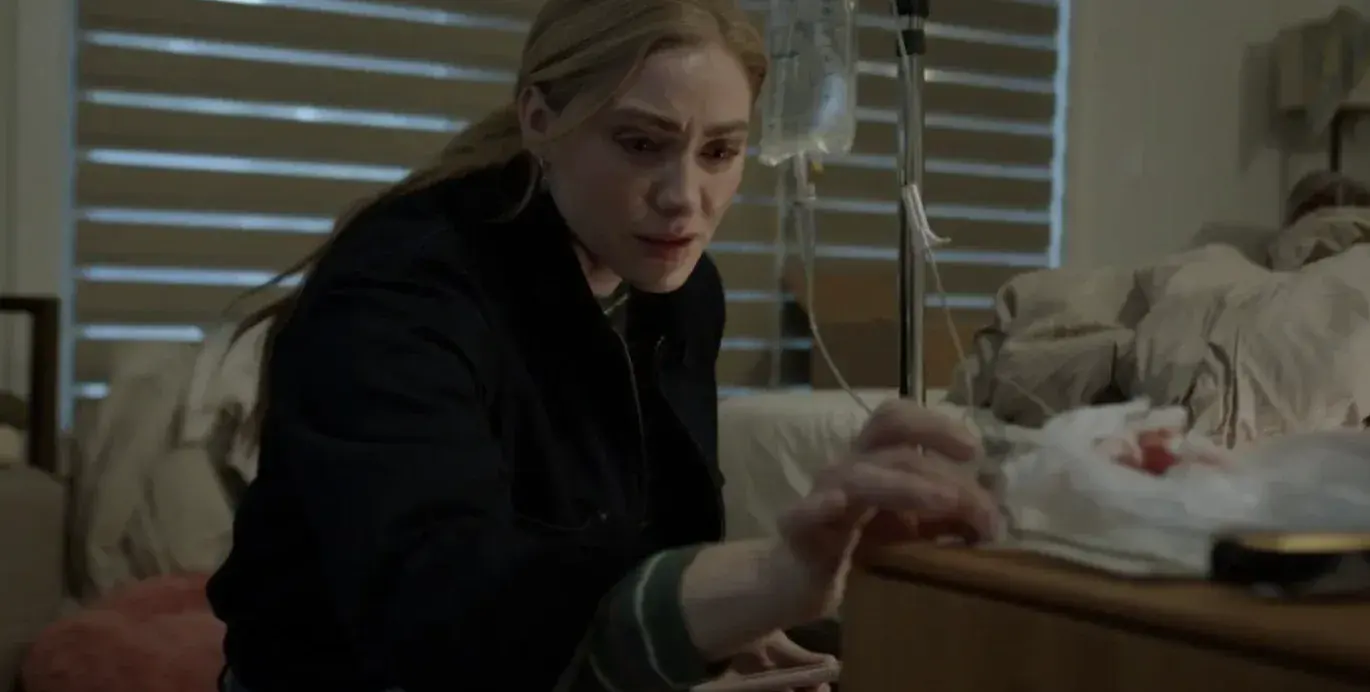
Lifetime’s A Doctor to Die For: The Sarah Harris Story arrives with an unusually direct connection to the real case behind it. The October 3 movie stars Siobhan Williams as Sarah Harris and Luke Macfarlane as Maryland oral surgeon Dr. James Ryan, following a relationship that begins through Ryan’s medical practice before Sarah’s mother and sister become increasingly concerned about what is happening around her.
Director Siobhan Devine’s film is based on Sarah’s real story, but one of its most important threads is not simply the relationship at its center. It is what happened after Sarah died in January 2022, when her family began examining photographs, messages and other records themselves. Executive producers Elisabeth Rohm and Kara Feifer said the production worked closely with the Harris family, making their persistence an essential part of the story rather than background detail.
Sarah Harris First Met James Ryan as His Patient
Sarah Harris was 25 when she died, but the public record surrounding the case shows a young woman whose life extended well beyond what later happened to her. Her mother described her in court as intelligent and ambitious. Sarah graduated from Quince Orchard High School, earned a scholarship to Montgomery College and competed in pageants, winning the Miss Maryland Petite title in 2020.
That same year, Sarah met Ryan through his Germantown, Maryland, oral surgery practice. CBS reported that she had gone to him for wisdom tooth surgery in the summer of 2020. Ryan later offered her a job at his practice, where she began working as a surgical technician. Police records place the start of their employment relationship in 2020 and their romantic relationship around January 2021.
Sarah eventually moved into Ryan’s Clarksburg home. What had started as a doctor-patient relationship had therefore become several relationships at once: Ryan had been her doctor, then her employer, and was now her partner.
That overlap would become significant when investigators later examined the substances Ryan had access to through his medical practice and the messages exchanged between the couple.
Her Family Became Concerned Before January 2022
The concern surrounding Sarah did not begin only after her death. Her family had already become troubled by changes they were seeing and by medical supplies inside the home she shared with Ryan.
CBS’ later investigation of the case reported that Sarah’s mother, Tina Harris, and sister Rachel Harris had questioned what was happening. Rachel had also photographed items she saw at the house, material that would become far more important once the family started reconstructing the months leading up to January 2022.
Court evidence ultimately showed that Ryan was providing Sarah with substances taken from his practice. The Montgomery County State’s Attorney’s Office said the substances included ketamine and diazepam, while the evidence also concerned propofol and midazolam. Prosecutors maintained that Ryan sometimes administered them himself.
The relationship was therefore not simply a case of two adults sharing access to medication. Ryan was a trained oral surgeon with professional knowledge of drugs normally used in clinical settings, and prosecutors focused heavily on that medical expertise when presenting their case.
Also Read: A Doctor to Die For: The Sarah Harris Story Cast Guide
Rachel Harris’ 200-Page File Changed the Direction of the Investigation
The most remarkable part of the real story may be what Sarah’s sister did next. Sarah was found unresponsive at the Clarksburg home on January 26, 2022. The medical examiner later determined that she died from intoxication involving ketamine, propofol and diazepam. Ryan told first responders that he had gone to bed the previous night and found Sarah the following morning. Her family was not satisfied that this explained the entire situation.
Rachel worked to gain access to Sarah’s laptop and iCloud account. Once she succeeded, she discovered extensive conversations between Sarah and Ryan discussing drugs and medical supplies. CBS reported that Rachel combined those messages with photographs she had previously taken and created a file of roughly 200 pages. She turned the material over to Montgomery County Police in February 2022.
That is a crucial part of the story because the digital record allowed investigators to look backward through the relationship instead of examining only what could be seen inside the house on January 26. Messages could show when particular substances were discussed, what Ryan offered to bring home and what he appeared to know about Sarah’s condition.
The investigation that followed led police to arrest Ryan on March 22, 2022. Montgomery County authorities said at the time that he had provided controlled substances to Sarah during the period leading up to her death.
The Text Messages Became Central to the Case
The text conversations eventually became some of the prosecution’s strongest evidence. CBS reported that messages showed Ryan offering Sarah ketamine for anxiety early in their relationship. Later conversations included repeated discussions of ketamine, propofol, syringes and other medical supplies, while one December 2021 message indicated that Ryan had given Sarah ketamine while she was asleep.
Those messages complicated Ryan’s account because they documented his own participation over many months. Prosecutors argued that, as a medical professional, he understood the risks of bringing powerful surgical drugs into a home environment but continued making them available.
The case did not depend on proving that Ryan deliberately intended the final outcome. In August 2023, a Montgomery County jury convicted him of second-degree depraved-heart murder, involuntary manslaughter and drug-related offenses. The State’s Attorney’s Office said the jury returned guilty verdicts on all counts after a two-week trial.
The “depraved-heart” charge is important to understanding the verdict. Prosecutors did not have to show that Ryan set out intending for Sarah to die. Their case was that his conduct showed such extreme disregard for a serious and foreseeable danger that it supported second-degree murder under Maryland law.
James Ryan Was Sentenced to 45 Years
Ryan was sentenced on January 3, 2024, to 45 years in prison, with credit for time already served. The sentence exceeded the advisory range discussed in court, with the judge emphasizing Ryan’s medical expertise and the position of trust he occupied in Sarah’s life.
The defense had argued during the case that Sarah struggled with mental health and substance-use issues and that the final dose could not be proven to have been administered by Ryan. Prosecutors, however, focused on the much larger pattern documented through the couple’s communications and Ryan’s repeated supply of substances from his practice.
Sarah’s family was present throughout that process. Their role is one reason the Lifetime adaptation has a different emotional center from a conventional crime procedural: the investigation is also a story about a mother and sister refusing to stop asking questions when the first explanation did not account for what they had witnessed.
Rohm and Feifer told TV Insider that they collaborated directly with the Harris family while making the movie. Feifer described the project not only as a cautionary story but also as one about resilience, while Rohm said the filmmakers wanted the story to help protect others in the future.
Ryan’s Legal Challenge Is Still Active in 2026
There is also a significant update that comes after most earlier coverage of the case. Ryan appealed his convictions, but the Appellate Court of Maryland affirmed them on September 3, 2025. He subsequently sought further review, and his case has now reached the U.S. Supreme Court through a petition for a writ of certiorari.
As of October 3, 2026, the Supreme Court docket lists the case as James Michael Ryan v. Maryland, No. 26-5559. The petition has been distributed for the justices’ October 9 conference. That does not mean the Supreme Court has agreed to hear Ryan’s case; it means the petition is scheduled to be considered as the Court decides whether review should be granted. Ryan remains convicted and is serving his sentence while that process continues.
Including that development is especially relevant now that Lifetime is bringing Sarah’s story back into public attention. The criminal trial reached a verdict years ago, but the legal record has continued to develop since then.
Why A Doctor to Die For Focuses on Sarah’s Family
Lifetime’s official synopsis emphasizes Ryan supplying Sarah with surgical-grade drugs and her family’s investigation after her condition deteriorates. But the real history explains why Tina and Rachel deserve to occupy so much of the movie’s attention.
Rachel’s evidence file did something a conventional retelling could easily overlook: it preserved a timeline. The photographs documented what family members had observed, while the digital conversations provided investigators with a record extending across the relationship.
That also gives the movie a more meaningful perspective than presenting Sarah solely through the circumstances surrounding her final months. Her family knew her before Ryan entered her life, recognized changes that worried them and continued reconstructing what had happened after she could no longer explain it herself.
The producers’ decision to involve the Harris family during production reinforces that approach. According to Rohm, they were willing to be open partners with the filmmakers, while Tina Harris remained in contact with the production during filming.
A Doctor to Die For is therefore based on a documented real case, not merely “inspired” by a vague collection of events. Its central characters carry the real names Sarah Harris and James Ryan, and the major legal outcome is part of the public record.
What gives the true story its strongest dimension, however, is what happened between Sarah’s death and that outcome. Her family’s refusal to accept an incomplete picture, and Rachel’s decision to preserve and organize the digital trail Sarah left behind, became part of the evidence that helped investigators understand a relationship that had unfolded largely behind closed doors.